RV Weight Issues - All That 'Stuff' Really Adds Up!
For my wife and I, our entry into full time RVing was an eye-opening lesson in weight reduction.
Just as you need to know your RV's height limitations and width limitations, you also need to know your RV's weight limitations.
However, the concept of minimizing our belongings took a number of years to get settled into our heads. Thinking that there were certain items that we couldn’t possibly live without led us to keeping way too much STUFF.
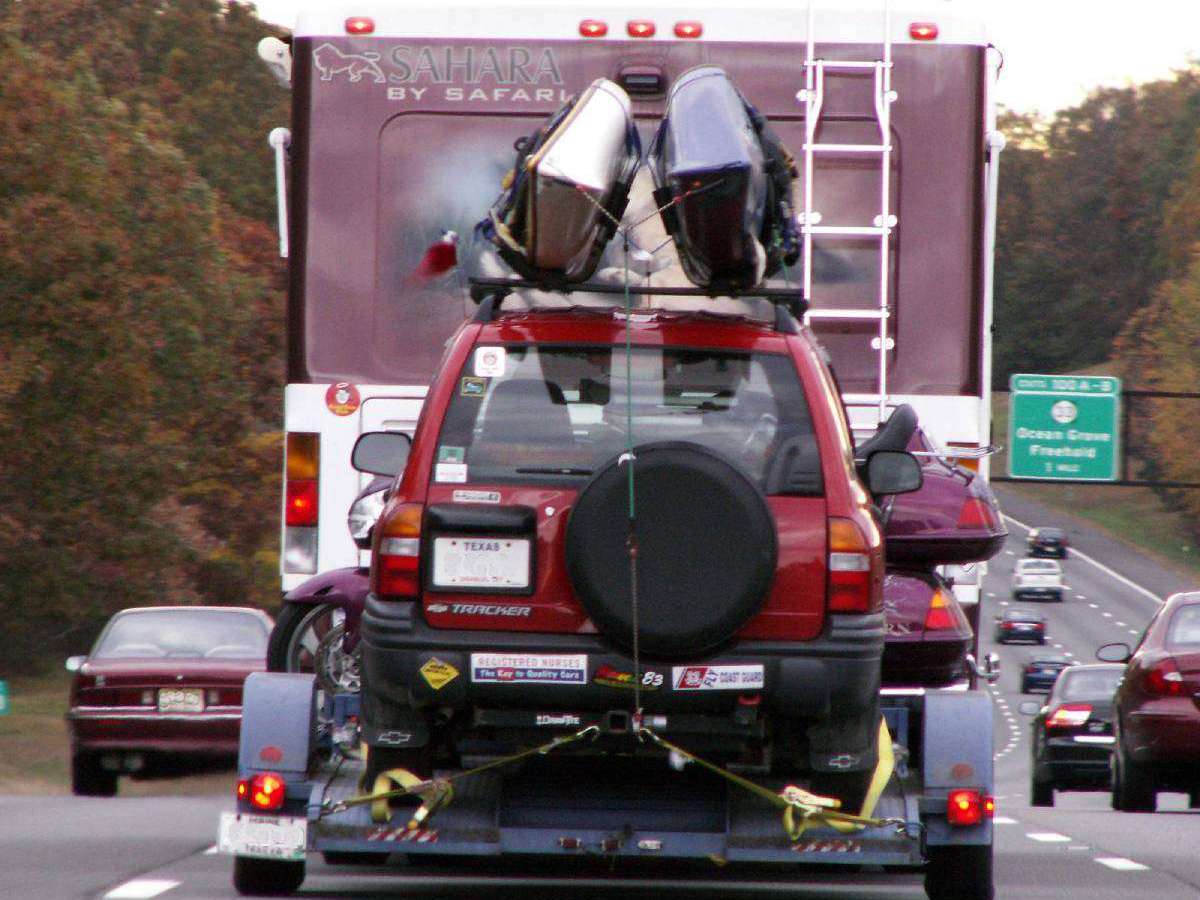
Our initial plan was plainly ludicrous. We thought we would live in our 25-foot Winnebago motorhome and pull a 16-foot cargo trailer containing all of those prized possessions we just couldn’t let go of.
Lucky for us, we immediately realized the fallacy of our ways and started to sell things in order to get rid of the trailer load of stuff.
When we finally did hit the road, it was with a more reasonable living situation.
We had a 36-foot travel trailer. It was large enough that the 2 of us could stand to be together in the same RV without killing each other. We pulled the trailer with a pickup truck. We had installed a topper (or truck cap) and filled that 8-foot space with the remainder of the "stuff" we just couldn’t let go.
As time progressed and we upgraded our RV more than once, all that dreaded STUFF followed along. I found myself unloading basement storage compartments from one RV, in order to move the same items into another RV. Most of this stuff never even saw daylight -- except during those moments of relocating from one RV into another.
Too Much Stuff
Now, 11 years later, where is all that STUFF that we dutifully dragged back and forth across the country? It’s carefully stored in the shed out in the backyard. It is still seldom being used and for the most part, it's forgotten.
The old saying “If it hasn’t been used in the past year, you don’t need it” is absolutely true!
People move on, change hobbies, and develop different interests. Going to extreme lengths to hang onto $1,000 worth of power tools that I seldom used just didn’t make good sense. How many people do you know carry a 5-speed drill press worth $50 in the storage compartment of their RV? I did, thinking "You never know when I’ll need to drill a hole!" I just couldn’t give up having the freedom to drill whenever I wanted.
How Much Weight Can Your RV Legally Carry?
Many RVs today are engineered right down to the fine line.
With gross vehicle weight ratings (total weight of the RV and everything in it) so close to the empty weight, loading much more than a few changes of clothes and the family dog is enough to set you over the factory recommended weight!
This is even more critical with travel trailers, because weight loaded toward the rear can dramatically affect handling characteristics.
Know Your RV's Weight When Empty
When you're calculating your RV's weight allotment, don’t forget the weight of the water in the tanks -- both clean water and waste water. Water weighs over 8 pounds per gallon. Most smaller RVs have at least 35-gallon tanks, 3 of them. That adds up to the better part of 1,000 pounds in water alone on board! That weight isn’t included in the manufacturer’s empty weight figure.
Many RVs come from the factory with a location to place a TV or DVD, but usually none are provided. Therefore, such items must be added to your RV's total weight. And if you had an air conditioner installed before delivery, that too is now added weight.
Little Things Pack On Pounds Quickly
Once you install enough kitchen-related eating and cooking utensils along with sheets, pillows, and basic bedroom items, you might be very surprised at how quickly your RV has approached the GVW rating.
By the time you’ve placed just the minimum number of outdoor items like lawn chairs, portable grill, and a bag of charcoal into the outside storage compartments of the RV, you're probably real close to maximum weight load.
For the new full time RVer, this is going to be a hard realization. Take it from me, it’s time to let go of all the STUFF that a house-bound life generates.
Read: Weights And Balances For RVers
How To Determine Your RV's Empty Weight
To get an accurate picture of where you stand in the weight department before you start loading in personal possessions, fill all your RV's water and waste tanks with water. Fill the propane tanks as well. Now, take your RV down to the nearest truck scale and have it weighed. This figure should be considered your "true" empty weight.
The total amount you can safely put in or on your RV from this point is the difference between this figure and the factory-rated Gross Vehicle Weight (GVW) that is posted on the tag at the front of your trailer or in the cab of your motorhome.
Don’t go down the highway and pull into the Department of Transportation's weigh station looking to find out your vehicle's weight. First of all, you're not a commercial vehicle and have no business in there at all. Secondly, if you're overweight, you’ll get a ticket and be forced to park right there until you come up with a way to get your weight down to legal limits. This could mean abandoning possessions right there on the spot.
There are many weight-related figures posted on your RV's identification tag. This list of RV weight definitions will help you understand what each actually means.
How To Determine Your RV's Weight When Full
Your next step, if you are dealing with a motorhome, is to deduct the weight of all possible passengers. Both people and critter alike.
As you load belongings into your RV, load boxes and then weigh them on your bathroom scale before you bring them onto the RV. That way, you'll have an idea of how much weight your adding with each item.
Keep a running tally, and you should be reasonably close to what your RV's gross weight has now become.
After the RV is all loaded, go back to the truck scale and see where you stand. If you still have a nice cushion of weight capacity, then you're good to go!
But don't forget to think down the road. As a full time RVer, you’ll be tempted to add small items to make your environment more personal. You’ll want to buy souvenirs as you go from place to place. But if you're not careful, then before you know it, you’ll be back into that STUFF rut -- only this time, you may not have the weight capacity to allow it!
Downsizing to the bare essentials is an ongoing struggle when you're a full time RVer. After some time, it will become a habit. Eventually, it will become a lifestyle that you can embrace and appreciate. Be patient, it’s going to take time. Once you get there you’ll feel a sense of freedom; freedom from STUFF!
Leave a comment