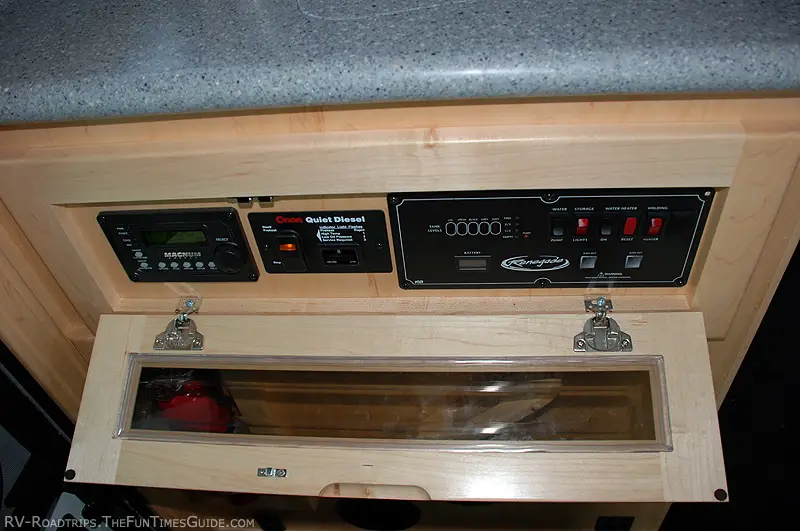
 RV generators are the most common source of power when you’re away from shore power.
It’s easy to become a little forgetful of the fact that, without regular attention, a generator will leave you powerless at the most inconvenient time.
Consider this scenario:
All summer, you’ve been staying at the same place, working for a campground up north. With the rig plugged into shore power, the generator has remained idle without a thought. Now it’s time to head to Quartzsite for a couple months of parking in the desert. That forgotten generator will come in plenty handy , but now it doesn’t want to start. How did this happen?
Unfortunately, many motorhomes have their generators permanently mounted underneath, or inside a storage compartment below the living area. This is just about the worst environment for such a piece of equipment because, while you’re driving, the generator is exposed to road dust, vibration and pounding rain.
The fact that the generator remains fairly reliable is nothing less than a miracle. However, without a little attention from you, that level of reliability will surely decrease — possibly to the point of complete generator failure.
Here’s what you can do to keep your RV generator running efficiently for years to come…
Why RV Generators Fail
Generator failure is very common in RVs, especially ones that sit unattended for long periods of time.
The list of possible problems is long, and troubleshooting an RV generator problem can be confusing and costly.
The best way to avoid failure is to use your RV generator regularly and maintain it properly. That way, your generator will not only provide a reliable source of power, but it will also retain maximum fuel efficiency when in use.
That’s right, as strange as it may sound, one of the most common reasons RV generators fail is lack of use!
Any motor left with old gas sitting in the carburetor is subject to forming lacquer. Usually, this will plug up the idle jets. Even worse, the sticky material will sometimes stop a generator cold.
The best way to avoid this problem is to simply run your RV generator on a regular basis.
At the very least, fire it up at least once a month and let it run for 30 minutes.
Not only will this circulate new gas through the fuel system, but it will also lubricate all the internal parts of the motor and give the bearings in the electrical part of the generator a fresh spin. Like a rolling stone not collecting moss, a spinning bearing will not collect rust.
It’s always more cost effective to do preventative maintenance servicing than to pay for emergency repairs when it fails.
Cleaning Your Generator’s Air Cleaner
The generator’s air cleaner (or air filter element) is designed to allow only clean air to enter the intake of the motor. But, driving down those dusty desert roads will coat the air cleaner with a fine powder.
Without regular cleaning (or replacing), you restrict air flow, allowing a richer fuel mixture. This can reduce efficiency and even cause premature wear on internal engine components as the extra fuel washes away oil.
So be sure to check and clean your generator’s air cleaner regularly. Some can be cleaned by blowing them out with compressed air, some can be washed in soapy water, and some must simply be replaced.
The same dirt buildup will also cover the entire generator, reducing its cooling ability. By hosing off the generator occasionally, you will keep this grimy buildup from becoming a problem. A little detergent will help cut the oily film, as well.
Generators are designed to run about 100 hours between oil changes.
And, just like your lawn mower, if you ignore it at the end of the season, then you’re likely to have problems next year. Maintaining regular service intervals is the best way to keep your RV generator reliable and ready to go when you need it.
What About Portable RV Generators?
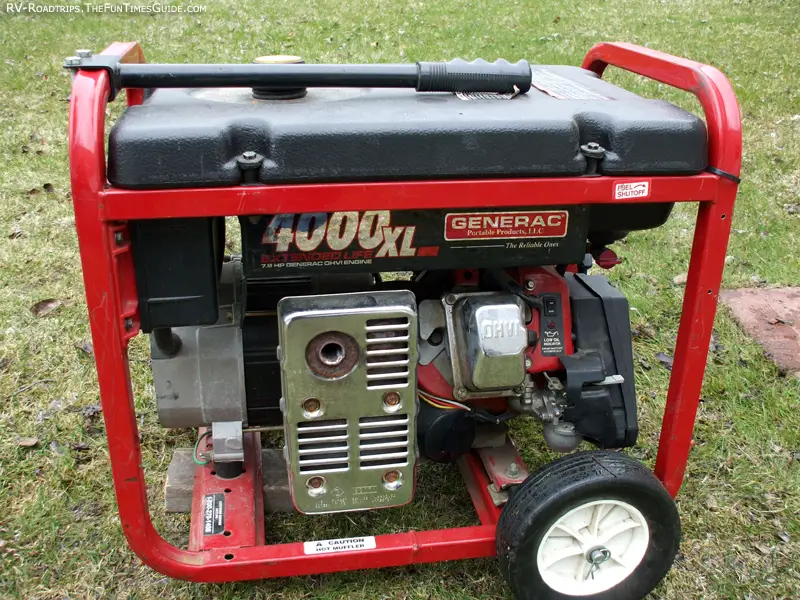
For the record, portable RV generators require the same amount of maintenance as one mounted permanently on your motorhome.
In fact, portable generators may spend more time in the corner of your garage rather than actually being used, which increases the likelihood of that grimy buildup occurring.
Here’s one additional tip for portable generators that will help to prevent old gas from sitting in the carburetor and turning into a sticky mess:
Every time you bring the generator back into the garage to store it until next time, start it up. After it has run for a minute or two, shut the fuel petcock off where it comes out of the fuel tank. This will allow all the gas in the carburetor to burn up.
The engine will shut down as it runs out of gas. Don’t turn the fuel petcock back on until your ready to use the generator again. It will only take a minute or so for gravity to allow the fuel to refill the carburetor, and you will find that it will usually start on the first pull with fresh gas in the carburetor.
If your motorhome is unused for months at a time (such as through the winter months) the same approach should be taken with the generator that is mounted underneath the RV. If there is no petcock to shut off fuel flow, one should be installed — both as a safety measure and to facilitate preparing for an extended period of storage.
With a little care and regular maintenance, your RV generator will be ready to go, and start right up the next time you need it!
RELATED:
RV Generator Maintenance Worksheet
- Cummins Onan Generators — diesel, gasoline, propane, portable, etc.
- Before You Buy A Portable Generator For Your RV…
- Pro’s & Con’s of Diesel Generator Power